
Chicken Subway Game by 100HP
Launching on December 25, Chicken Subway from 100HP Games adapts a familiar endless-runner concept into an arcade betting format built around three active lanes, progressive multipliers, and euro-based stakes (€). Each run begins with a player-selected bet (typically from around €0.10) and increases risk step by step, encouraging fast decisions, short play sessions, and a medium-to-high volatility style characteristic of runner-based crash games.


Features of 100HP Chicken Subway Crash Game
From a technical standpoint, the RTP is expected to be around 96%, which fits well with fast arcade-style betting games. The risk profile leans toward medium to high volatility — each step forward slightly raises exposure in exchange for a stronger multiplier. A typical run is likely to begin with a base Chicken Subway 100HP bet from €0.10, while the multiplier builds gradually as the run progresses.
Because of this setup, gameplay tends to stay quick and decision-heavy. Sessions are usually shaped by timing and judgment rather than long automated cycles, which aligns with how 100HP Games has been structuring its recent arcade releases.
| Feature | Details |
| 🕹️ Chicken Subway Game format | Runner-style crash game with three active lanes. |
| 📊 RTP (expected) | Around 96%. |
| 🎲 Volatility | Medium to high risk profile. |
| 📈 Multipliers | Progressive growth as the run continues. |
| 💶 Base bet | From €0.10 per round. |
| ⚡ Round pace | Short rounds with frequent decisions. |
| 🧠 Player control | Manual movement and cashout timing. |
| 📱 Platforms | Desktop and mobile support. |
| ⏱️ Session style | Designed for quick, controlled play sessions. |
| 🧩 Provider | Developed by 100HP Games. |
Chicken Subway RTP & Volatility
Based on the game’s structure and the typical parameters used in arcade-style crash formats, the RTP is expected to sit around 96%, with a medium to high volatility profile. The balance is shaped by progressive multipliers: early cashouts keep variance lower, while deeper runs increase both exposure and potential return. This setup generally favors short sessions and rewards disciplined timing over extended play.
Online Game Fairness
Like most modern arcade betting games, Chicken Subway is expected to follow a provably fair-style logic built on RNG calculation rather than scripted outcomes. In practice, this usually means that each run is generated independently, with numerical parameters defined before the round starts and not altered by player actions.
From a technical perspective, 100HP Games Chicken Subway fairness in this format is commonly supported by measurable elements:
- RNG-based calculations operating within a fixed RTP range (around 96%)
- independent probability generation on every run, without carryover between rounds
- predefined multiplier steps with mathematically weighted risk distribution
- identical behavior between demo and real-money modes
While player decisions affect when risk is taken (how far the run continues), they do not change the underlying probability model. As with most 100HP Games releases, full certification and verification details are typically published after launch and may vary depending on the European jurisdiction.
Free Credits Demo Play (No Reg Needed)
For players who want to understand the pacing and risk before betting real money, Chicken Subway is expected to offer a free credits demo mode with no registration required. This format typically mirrors real gameplay closely, allowing players to test lane choices, multiplier growth, and cashout timing without financial pressure.
In most 100HP arcade-style games, Chicken Subway demo credits simulate a low-entry structure (often starting around €0.10 per run) and follow the same probability logic as real-money play. That makes demo sessions useful not just for practice, but for getting a realistic feel for volatility, round length, and decision density before switching to euro bets.

100HP Chicken Subway Choose & Win Gameplay
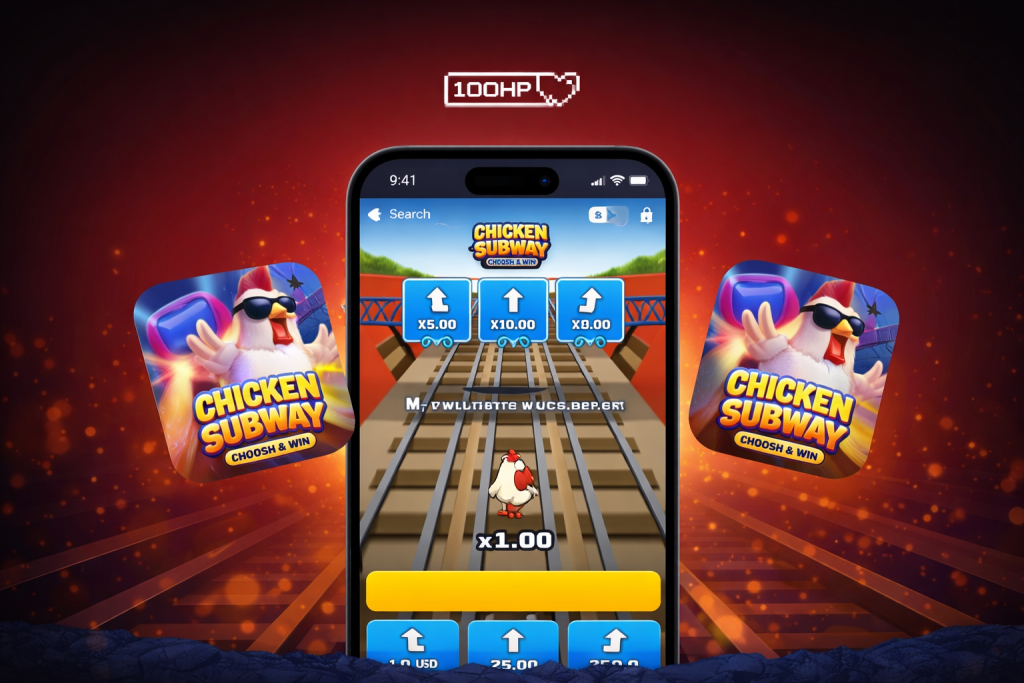
From both a design and player perspective, Chicken Subway is about controlled pressure. A run usually begins at x1.00, and each correct lane choice nudges the multiplier upward — often through familiar steps like x2.00, x3.00, and higher the longer the run survives. There’s no passive flow: every move is intentional, and every extra step increases the cost of being wrong.
In practice, most runs unfold over a limited number of moves, creating fast cycles where timing matters more than patience. Cashing out Chicken Subway early feels safe but modest; staying in the run sharpens tension as the multiplier climbs faster than comfort. That balance — between momentum and restraint — is where the arcade influence really shows, turning simple lane choices into meaningful betting decisions.
Three Lane-Based Multiplier Choice Game
At the core of the gameplay is a simple but escalating choice system. Each stage presents three lanes with different risk–reward ratios: safer options with smaller gains and more aggressive paths offering faster multiplier growth. As the run progresses, the gap between these choices becomes more pronounced.
Example of 100HP Chicken Subway Lane Choices by Stage
| Stage | Left Lane | Center Lane | Right Lane |
| Start | x1.20 | x1.40 | x1.70 |
| Early run | x1.60 | x2.10 | x2.80 |
| Mid run | x2.30 | x3.20 | x4.50 |
| Late run | x3.80 | x5.50 | x7.00+ |
This structure makes lane selection a meaningful decision instead of just a cosmetic choice. Early stages reward patience, while later stages reduce safety margins and push higher multipliers into tighter windows, reinforcing the arcade-style tension the game is built around.
Automatic Choice Chicken Subway Mode
To maintain a fast arcade pace, each stage gives the player around 5 seconds to choose one of the three lanes. If no selection is made within that time, the game automatically picks a lane and continues the run. This Chicken Subway mechanic keeps rounds moving, adds time pressure to decision-making, and ensures that hesitation itself becomes part of the risk without altering the underlying probability logic.
In-Game Obstacles
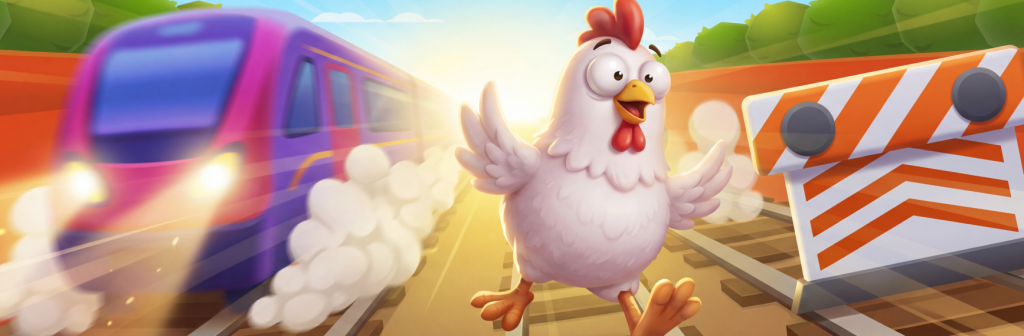
Progress through the run is influenced by visible in-game obstacles, mainly barriers and approaching trains, which establish safe and risky lanes at each stage. These elements serve as strict stop conditions: selecting a blocked lane immediately ends the run, while open paths allow the multiplier to keep increasing. From a gameplay standpoint, obstacles make lane choices clear and enhance the arcade feel, where attention and timing are just as important as risk-taking.
Chicken Subway Mobile-First Gameplay
Mobile gameplay is at the core of how Chicken Subway is built and tested. The interface, timing windows, and lane selection are designed around touch input, short attention cycles, and fast reactions rather than desktop-style precision. During testing, the focus was on keeping rounds readable on small screens while preserving speed and control.
| Chicken Subway Mobile Gameplay Aspect | How It Works in Practice |
| 📱 Primary platform | Designed mobile-first, desktop as secondary |
| ⏱️ Decision timing | ~5 seconds per lane choice, tuned for touch play |
| 👆 Touch controls | Wide tap zones to avoid misclicks under pressure |
| 🧠 Information layout | Multipliers, lanes, and obstacles stay visible at once |
| ⚡ Session length | Optimized for short, repeatable runs |
| 🔋 Performance focus | Lightweight animations to reduce lag and battery drain |
Android Chicken Subway Online Play
On Android devices, the game is optimized for stable performance across common screen sizes and mid-range hardware. Touch responsiveness and timing feel consistent, even during faster multiplier progression, which is critical in a runner-based betting format.
Optimization for iOS
On iOS, the emphasis is on responsiveness and visual clarity. Animations are kept minimal, transitions are fast, and input latency stays low, helping maintain control during time-limited lane decisions without overloading the interface.
Official Win Increase Strategies by 100HP
These approaches don’t change probabilities, but they do influence how risk is taken during a run. In a runner-based Chicken Subway crash game format, discipline and structure often matter more than intuition.
Low-Lane Accumulation Strategy
This approach focuses on consistently choosing the lowest-risk lane during the early and mid stages of a run. The goal isn’t to chase sharp multipliers, but to build value gradually and exit before risk compresses.
Example: Starting from a €0.10 bet, the player repeatedly selects the safer Chicken Subway lane through early steps, allowing the multiplier to climb slowly toward x1.8–x2.3. Cashing out at this level keeps variance controlled while maintaining frequent small wins.
This Chicken Subway strategy suits players who prefer longer balance life over rare high spikes.
Fixed-Step Cash-Out Strategy
Here, the player defines the exit point before the run starts and sticks to it regardless of momentum. The strength of this method is removing emotional decisions once the multiplier begins to rise.
Example: A player decides in advance to cash out after 5 successful steps, typically landing near x2.0–x2.5, depending on lane choices. Even if the run feels “clean,” the exit remains fixed.
This method works best for players who tend to overextend after a few successful moves.
One-High / Two-Safe Rotation
This strategy introduces controlled aggression by mixing one higher-risk lane between safer choices. It’s designed to stretch Chicken Subway multipliers without fully committing to high exposure.
Example:
- Step 1–2: safer lanes
- Step 3: higher lane (pushing toward x3.0+)
- Step 4: back to a safer option
If the high-risk step succeeds, the multiplier jumps meaningfully; if not, losses stay limited due to earlier conservative choices.
Timeout Discipline Strategy (Underrated)
Because Chicken Subway applies a ~5-second decision window, timing itself becomes part of the strategy. This approach treats hesitation as a signal to exit rather than a mistake.
Example: If a player reaches a stage and feels unsure which lane to pick within the first 2–3 seconds, the correct move is often to cash out immediately instead of forcing a choice. When confidence drops, risk perception is usually lagging behind multiplier growth.
This strategy is subtle but effective, especially in later stages where mistakes become expensive.
Keep the Responsible Gambling
If Chicken Subway gambling starts to feel difficult to control, confidential support is available:
- BeGambleAware — https://www.begambleaware.org
- GamCare — https://www.gamcare.org.uk
- Gambling Therapy — https://www.gamblingtherapy.org
- National Helplines (EU & international) — https://www.responsiblegambling.org
Chicken Subway is built around fast decisions and short rounds, which makes self-control more important than in slower casino formats. Before starting a session, it’s worth setting simple boundaries: decide on a maximum session budget, choose a comfortable base bet, and have a clear idea of where you plan to cash out. These limits help keep play intentional rather than reactive.
FAQ
What kind of game is Chicken Subway: Choose & Win?
Chicken Subway is an arcade-style crash betting game built around a runner concept. Instead of spinning or waiting for an automatic outcome, players move through a run step by step, choosing between three lanes with different risk and reward levels. The further the run goes, the higher the multiplier — and the higher the risk.
Is Chicken Subway a skill-based game?
Chicken Subway isn’t a pure skill game, but player decisions matter. The underlying outcomes are RNG-based, while skill comes into play through timing, lane selection, and cashout discipline. Knowing when to stop is often more important than how far you push the run.
Are higher multipliers more risky?
Yes. Higher multipliers are tied to later stages of the run, where fewer safe options remain. While early steps tend to feel more forgiving, pushing toward larger multipliers increases exposure and reduces margin for error. This risk–reward curve is central to the game’s design.
What does “automatic choice” mean?
At each stage, Chicken Subway players have around 5 seconds to choose a lane. If no selection is made within that time, the game automatically picks a lane and continues the run. This keeps gameplay fast and prevents stalled rounds, without changing the underlying probabilities.
Can I cash out at any time?
Cashout is typically available between successful steps, allowing players to secure the current multiplier before advancing further. Once a new lane is selected, the outcome of that step must resolve before another decision can be made.
Does the demo mode work the same as real play?
In most 100HP Games releases, the demo mode follows the same logic and probability structure as real-money play, using virtual credits instead of euro bets. This makes it useful for understanding pacing, volatility, and decision pressure before playing with real funds.
Does changing lanes affect future results?
No. Lane choices influence current risk exposure, not future outcomes. Each step is generated independently, and previous decisions do not alter the probability model of upcoming stages.
Is Chicken Subway fair?
Like most modern arcade betting games, Chicken Subway is expected to rely on RNG-based logic with independently generated runs. Player actions affect when risk is taken, not how results are calculated. Certification and regulatory details are typically disclosed by the developer after release and may vary by jurisdiction.
Who is the developer of Chicken Subway: Choose & Win?
Chicken Subway: Choose & Win is developed by 100HP Games, a studio known for adapting familiar arcade mechanics into fast-paced betting formats designed for short sessions and mobile-first play.